The agony of Freddie's final days
He had prayed for a miracle. Part of him hoped almost until the end that redemption would come. Back at Garden Lodge in Kensington, having left his Territet, Montreux apartment for the final time – a pained departure that meant he would never see his beloved daughter again – Freddie gave in to the inevitable.
Though his eyesight was deserting him rapidly, he tried distracting himself by returning to his original preoccupations of drawing and painting. He didn’t stick at them for long, however. He was no longer up to it.
Those around him knew for certain that he had resigned himself to his fate when he announced that he was stopping his medication. From then on, he refused everything except pain relief. His decline accelerated thereafter, and was excruciating. He occupied himself in simple ways, seemingly unfazed by the idea of his own death, and pretended to ignore the fact that journalists and photographers had been camping on his doorstep for weeks. He knew that they would not disperse until he had drawn his last breath. He was, therefore, a prisoner in his own home and there was nothing that he could do about it – except give in and let go.
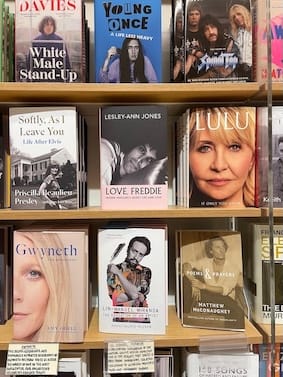
As though in preparation for that irreversible moment, he had been cutting people off for some time. He put off friends and family members who wanted to come to the house to see him for ‘one last time’. There was only so much of the agony of goodbyes that he could take – plus, we now know, thanks to his daughter having revealed it in Love, Freddie, he had never been able to face the pain of personal goodbyes.
There was also the fact that Freddie’s physical appearance had declined so dramatically. Now the wisp of a shadow of his former self, the sight of his AIDS-ravaged face and body, to anyone who hadn’t seen him for a while, was shocking. He couldn’t bear to put them through it. Only his closest friends and members of his household got to spend time with him at that point.
Dave Clark, Elton John and Tony King all came to the house. Former boyfriends Jim Hutton and Joe Fannelli, and PA Peter Freestone, took care of his personal needs. Freddie’s doctor and friend Gordon Atkinson paid regular visits. Terry Giddings, his driver, still turned up every day.
Mary Austin, now heavily pregnant, looked in often, but didn’t stick around longer than was necessary. It was feared that spending too much time with Freddie as he now was might be detrimental to her pregnancy.
Final week
His final week saw visits from his parents, his sister Kashmira, her then husband Roger and their two children. The family all had tea together in Freddie’s bedroom. Brian May and Anita Dobson looked in, as did Roger Taylor and his then partner Debbie Leng. If they had twigged that they would never see their old friend again, none of them let on.
On 23rd November, Queen manager Jim Beach arrived at Garden Lodge. He ascended to Freddie’s room and took a seat at his bedside. Together, they crafted Freddie’s now famous statement, admitting that he was dying of AIDs and explaining why he had never addressed the issue previously. His stark words were released publicly later that day:
‘Following the enormous conjecture in the press over the last two weeks, I wish to confirm that I have been tested HIV positive and have AIDS. I felt it correct to keep this information private to date to protect the privacy of those around me. However, the time has come now for my friends and fans around the world to know the truth, and I hope that everyone will join with me, my doctors and all those worldwide in the fight against this terrible disease. My privacy has always been very special to me, and I am famous for my lack of interviews. Please understand this policy will continue.’
Less than twenty-four hours later, Freddie died in his own bed, under his own roof, with only his close friend Dave Clark at his side – despite claims made by others of Freddie’s circle, including Jim Hutton, that they were in the room with him when it happened. Mary Austin could not be there because of her condition. The stress of watching the love of her life slip away might have been too much for her.
For obvious reasons, his daughter was not with him when he died. They had had each other for only fifteen years, and neither was ready to let go. The heartbreak and stress of the loss of him were so acute that almost three and half decades later, aged forty-eight and a parent herself, his daughter still suffers.
Freddie had written his final entry in the last of his secret notebooks on 31 July 1991, three months and twenty-four days before his demise. When he gave the journals to his only child shortly afterwards, he asked her if she wanted to discuss them:
‘…I didn’t want to talk about any such thing,’ she retorts. ‘I was fourteen and a half years old. It was summer. The last thing I wanted to do was to read and discuss my dying dad’s writings.’
Which might seem a callous reaction, but was probably bravado. Freddie’s final months were in fact incredibly hard for her. ‘Dad had already planned everything,’ she recalls. ‘We still had our daily phone call, every single day, but we could no longer see each other as often as we were used to…. The time left to us amounted to only a few weekends and my school holidays. He had changed so much physically that each time I saw him, he looked like a stranger to me.’
The day he told her he was dying of AIDS was a strangely sunny morning: ‘I was with him in Montreux,’ she says. ‘… the light was very beautiful above the morning mist over the lake. Time, as it tends to when solemn things happen, stood still. What he was telling me didn’t seem real, although I knew in my heart that it was true.
‘A few days later, the day I saw him for the very last time, it was raining heavily and the sky was menacing and dark … less than four weeks later, he would be dead and gone.’
Unbearable memories
To this day, she is haunted by unbearable memories – none more so than the callousness of those members of the press who gathered like vultures and waited for him to expire. Although they were only doing their job, and had been commanded by their editors to go there and to stay for as long as it took, ‘those people deprived him of his last days, his final precious hours,’ she points out. ‘To them, he was no longer a human being. He was just a headline. I find their cruelty towards their fellow human hideous.’