Thank God it's Christmas
How Freddie Mercury fell in love with Christmas - and spoilt his secret daughter with gifts and love.

LAJ's 'Love, Freddie' is now available as an audiobook: click here to buy...
The dream of the child is the hope of the man
More than any other time of year, Freddie loved Christmas. For him, it represented hope and new beginnings. It whisked him back to a childhood that had never been his to experience, given that he had been born a Parsi in Zanzibar and was raised according to the tenets of his parents’ Zoroastrian faith.
But when their son was eight years old, they packed him off to St Peter’s in Panchgani, India, a traditional, British-style boarding school with a Christian shape. It was there that Freddie discovered the joys and meaning of Christmas, where he felt enveloped by its rich choral music, was exposed to the shepherds, angels and Magi in the stories of the Holy Bible, began to learn about Jesus and found himself fascinated by the long-awaited Messiah who was born in a stable, died on the Cross and would come again in glory to save the world.
There is no doubt, according to the many thoughts and emotions that he recorded in his own handwriting in his personal notebooks, that Freddie believed. This was neither a contradiction nor a rejection of the religion into which he had been born. His awakening to a bigger picture in which faith has many interpretations enriched his imagination and expanded his mind.
While continuing to practise his family’s religion, he attended Christian Mass along with all the other boys. In the Bible, he found the words of Jesus that changed him. He would remain faithful to both Zoroastrianism and Christianity for the rest of his life. He paid assiduous attention to his Catholic-born daughter’s religious education, and assured her of her right to feel both Zoroastrian and Christian.
Of all the rituals and traditions of both teachings throughout the year, the festival of Christmas enchanted Freddie most. How sad that he was never once able to spend Christmas Day with his only child: the daughter conceived by accident with the wife of a close friend while her husband was away on business. The news of her impending birth, in February 1977 when Queen were already global superstars, gave him the biggest thrill of his life. He would later describe her in writing as his ‘greatest achievement.’
But it came at a price. As she lived with her birth mother and stepfather, at first in London, for several years in Europe, then returning to England for a spell before relocating again to the continent, she was part of a privileged, stable family with established relationships and routines while Freddie was the reluctant, drifting outsider.
As hands-on a father as he could be, given his hedonistic lifestyle, complicated relationships and the band’s commitments to the road and the recording studio, he was never able to live with his child full-time. Having undertaken to keep her out of the public eye so that she could be raised in privacy, enjoy a relatively normal life, and would not be exposed to the downsides of her father’s fame, he had no choice but to accept that he would never be able to spend Christmas Day itself with her.

‘I never once had Dad with me on Christmas Day,’ she affirms. ‘Our Christmas holidays were always spent at the homes of grandparents: either the parents of my mother or those of my stepfather. Traditions were rigorously upheld. My stepfather would never give in about that.
‘Due to my stepfather’s inflexibility about Christmas, Freddie made up for it by giving me memorable Christmases galore, that lasted from early December all the way into January. We also celebrated Christmas more than once. We’d spend days reading lovely, traditional Christmas tales, which instilled in me a passion for old books with wonderful illustrations and illuminations. There would be dinners, concerts and other live performances; magical evenings spent singing Christmas carols and listening to other Christmas music. And almost every day, there would be a delivery.’
Freddie had his own version of what an Advent Calendar should be, his daughter recalls. ‘He also made up his own rules. Christmas with my father was an even happier and more magical time than all the other happy, magical times with him.’
Freddie hosted three Christmas parties each year: one at his home, Garden Lodge, with his personal staff and a handful of friends; another at Phillimore Gardens, the love nest he shared with his long-term fiancée Mary Austin (from whom, it turns out, he never separated), and one at the home of his parents, Jer and Bomi Bulsara.
‘Mary was always there,’ says. B., ‘on every single occasion. Presents were extremely important to him, especially the gifts he gave to her. There would always be several of those, of course. At Garden Lodge, in front of everybody else, he would give her a “professional” present, usually something that she would find useful. Behind close doors at Phillimore Gardens, he would give her his private love gifts.’
It is often said, she reflects, that Freddie was a complete spendthrift: ‘That he had no idea about the price of anything, and that he didn’t know the value of money. It’s not really true. He did spend freely without counting the cost, because he could afford to. But he always lived within his means. He never forgot the years spent living hand to mouth with no money in his pockets. He knew a lot of people with ordinary jobs and lifestyles, and he never hesitated to help them when they needed it.’
Freddie’s final Christmas, in December 1990, was spent as usual with his personal entourage at Garden Lodge. By then, his physical deterioration was obvious to all who were close to him. Insisting on the usual rituals and traditions, his home was decorated more lavishly than any lifestyle magazine, while his table groaned with festive treats. Both Mary and Jim Hutton, the latter long believed to have been his live-in lover but who now emerges from Freddie’s handwritten account of his life as having been no more than a relationship of convenience, were there to help him celebrate. A huge turkey graced the table on Christmas Day, while on Boxing Day they feasted on ham and cold cuts. He rose to the occasion as ever, concealing a heart that heaved with regret and pain.
If only he had been able to spend his last Christmas with his cherished daughter. Separated by distance and by family expectations and constraints, all they could do was chat at length on the phone and reassure one another that they would be together again very soon. At not quite fourteen, B. was already aware that all was not well. She could feel her father slowly slipping away from her.
Within months, he would conclude the writing of his private journals, and would gift her the secret collection of seventeen volumes before his eyesight deserted him, perhaps fearing that he might no longer have a say in what would become of them. Into her hands he entrusted them, instructing her not to read the second batch until she reached her twenty-fifth birthday. Devastated by the loss of him in November 1991, B. hid them from the world for thirty years.
Christmas, for Freddie, a time of spoiling his loved ones with generous gifts and joyful celebrations, was also a reminder that he had been blessed with the greatest gift of all. He never took parenthood for granted. The irony was that the one thing for which both father and child yearned, they were never able to have. Thus did Christmas also become a time of emptiness and longing, symbolic of the essential, the only things that matter.
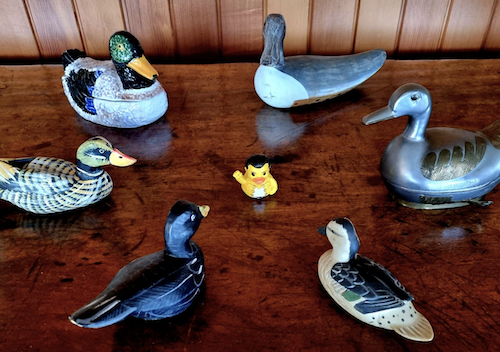
In December 1995, four years after Freddie’s death, Queen released their final album with Freddie, Made in Heaven. Inspired by the majestic views from its windows, he had written its jewel, ‘A Winter’s Tale’ at the Duck House: the secluded, modest dwelling on the shore of Lake Geneva outside Montreux, Switzerland where I stayed for his anniversary a couple of weeks ago.
He would record the dreamy song in an unusual single, live take at Queen’s Mountain Studios just down the road. Capturing the wonders of the natural world and his genuine love for life on Earth, Freddie at last sounds able to leave it, reassured that it would go on. It exudes a kind of magic that endures as a theme for Christmas.