Sun Studio and the birth of rock'n'roll
LAJ's pilgrimage to Sun Studio, the holy birthplace of rock'n'roll
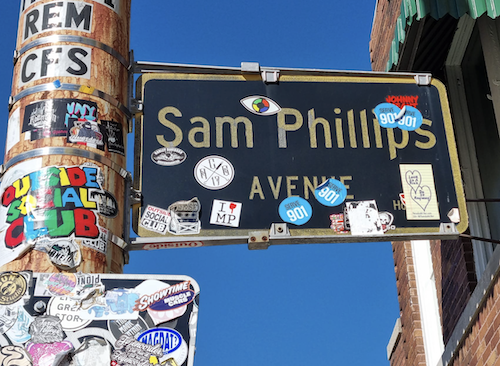
‘The blues, it got people – black and white – to think about life, how difficult, yet also how good it can be. They would sing about it, they would pray about it; they would preach about it. This is how they relieved the burden of what existed, day in and day out.’
‘My aim was to try and record the Blues and other music I liked. I knew this music wasn’t going to be available, in a pure sense, forever.’
Sam Phillips, founder, Sun Studio and the Sun Record Company label
A one-time white cotton picker in the fields of dreams, farmer’s son Sam Phillips heard the clarion call of black labourers relieving toil with their voices, and was inspired. He followed the music, forged his way as a DJ, and went on to found, on 3rd January 1950, a modest workshop at the intersection of Union Street and Marshall Avenue, Memphis that would change the world. To what was originally called the Memphis Recording Service he welcomed musical amateurs regardless of colour or creed, years ahead of the sound of civil rights. Howlin’ Wolf , B.B. King, Carl Perkins, Roy Orbison, Johnny Cash and a hungry mob flocked. Sam launched his Sun Record Company label two years later.
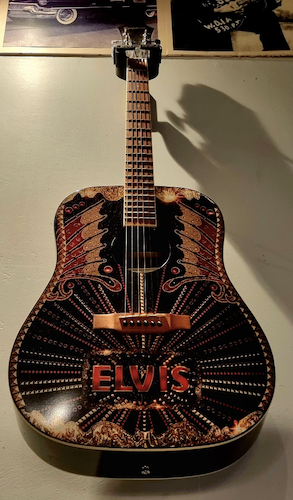
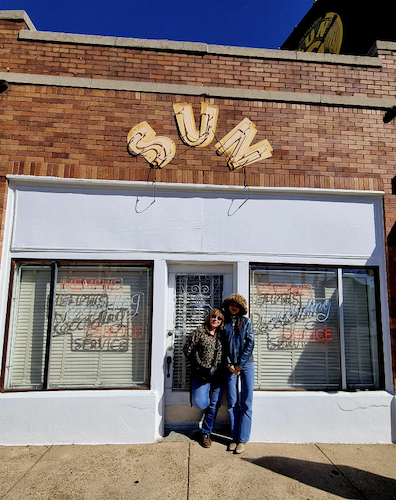
Sun Studio had loomed large in my mind forever as a place I needed to get to. The place that was the point. Because that was where it all began. The music that has consumed my entire adult life was born there. It is music’s Mecca, a place of worship. I had always been aware that I would have to make the pilgrimage one day. Simply to reflect, to wonder and to pay my respects. Among the 226 singles produced there was the one folk regard as the world’s first rock’n’roll record. Sam licensed the recording, originally styled as ‘Rocket “88”’, to Chess Records for release. It emerged erroneously under the name Jackie Brenston and His Delta Cats. While it is true that sax player Brenston provided the vocal, the band was really Ike Turner’s Kings of Rhythm. Nineteen-year-old Ike had created the song. The twelve-bar blues offering was sexy and wild. Its distorted sound fuzzed from the guitarist’s broken amp that somebody had stuffed with newspapers. Of such well-I-nevers is folklore made.
You don’t know unless you go. Reading the history of a place, gazing at photos and tuning into cracked recordings are no substitute for the being there, the looking, the seeing, the knowing for yourself. You have to stand in that small, stale, windowless space to smell the ghosts, to inhale their immortality, to feel the shiver up the spine and swallow the catch in your throat as they coax back to life the magic that swelled there. I had felt it before, could I remember when and where? Yes. It came to me. Eighteen years ago, on the Nile’s west bank at what is now Luxor, my younger two children and I found ourselves in the cradle of Egyptian history and mythology in the Valley of the Kings. Rock-cut tombs house the remains of pharaohs, the most lauded of them Tutankhamun. There is a connection: Memphis at the head of the Nile was ancient Egypt’s original capital. When seventh US president Andrew Jackson, his slave-trading advisor John Overton and former military officer James Winchester founded Memphis at the head of the Mississippi Delta in 1819, they envisioned the majesty, magnitude and reach of the original for their own fledgling city.
Everyone knows that a 19-year-old truck driver sidled into Sun one day in June 1953 and changed everything. Elvis Presley paid his four dollars to cut an acetate demo, a personal disc, and sang ‘My Happiness’ and ‘That’s When Your Heartaches Begin’. He returned six months later to record another two sides. Sam doubled as the meteor shot through his heart. He took the kid on. A string of singles and a plethora of live appearances followed. Elvis was soon big all over the South. When Sam sold Elvis’s contract to RCA for $35,000 in November 1955, the legend of legends was born. That transaction enabled Phillips to build his ultimate dream. He vacated the old premises in 1960 and relocated to a dedicated recording complex. The nondescript corner where it all began became a garage, then a barber’s shop before the tumbleweed blew in.
After Elvis died in 1977, there were attempts to relaunch the old studio as a tourist attraction. It failed to take off. By 1986, defeat was conceded. It was about to be folded into a trattoria when one Gary Hardy arrived to resurrect it as a recording facility. The names came. U2, Ringo Starr, Bonnnie Raitt, John Mellencamp, Def Leppard. Though it is mainly a visitor destination today, artists continue to record there.
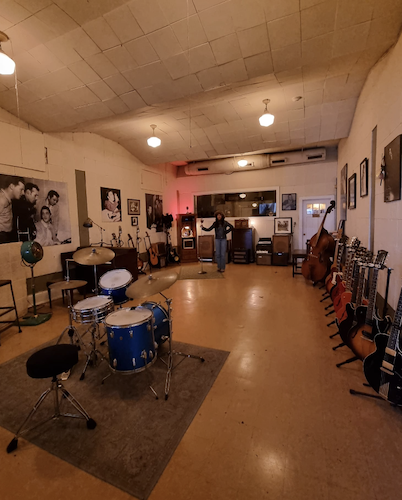
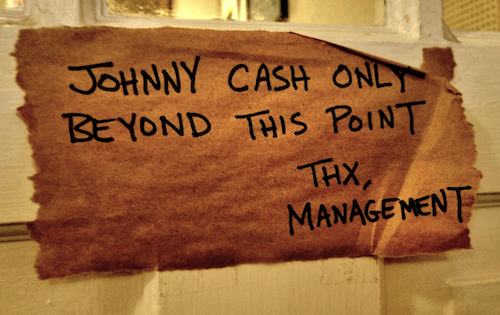
Rock’n’roll is as much about the forgotten and the obscure as about superstars. Few remember today the name Marion Keisker. Sam Phillips’s assistant was the first to come face to face with Elvis, the first to record his singing voice, the first to realise his potential, the first to be floored by the radiation of his gleam. How fitting that it was a woman. Her cupboard of an office serves today as an antechamber to the hallowed tomb where the greats once grafted. The tiny control room at the back is where Sam once twisted the knobs. The studio’s walls, doors and tiles still bear ancient taped notes that have as good as grown into the grime of time.
sun-studio-and-the-birth-rock039n039rollBack then, a record was about capturing lightning in a bottle, the spell of the unrehearsed burst. It was done for real. There was no take by take, no cut-and-paste. Spin it back and there was that exact-same experience again, an exquisite moment in time that could be savoured over and over but never repeated exactly as it sounded when they got it down. That was the point. That was why it mattered.
Recording moved on. Technology and techniques took over, superseding spontaneity and simplicity. You’d have to say that, amid all that sophistication and progress, something precious and irreplaceable was lost. Before, there had been no seeking to match, to follow, to improve on a trend. There was no trend. Instead, it had been all about the blend – of blues, country and gospel combined and brought to the boil in an entirely new sound that would redefine music. Many modern musicians would do well to take a moment and look back at how it was done.
Elvis’s first professional release, incidentally, was not planned. He was in a try-out session at Sun with guitarist Scotty Moore and bass player Bill Black. No groove. The day was slack. During a break, for a laugh, Elvis started thrumming an accelerated take on Arthur ‘Big Boy’ Crudup’s 1946 number ‘That’s All Right’. Sam’s ears swivelled. There it was, the perfect cover that would give them a regional hit. Less than two years on, Elvis celebrated his first major hit record and first Billboard pop chart number one. ‘Heartbreak Hotel’ was released on 27th January 1956 by RCA Victor. It shifted more than a million copies. It made him a star. In March the following year, he was so rich that he was able to purchase Graceland. Stay with me, we’ll be going there next.
- All images are (C) Lesley-Ann Jones and may not be copied, shared or distributed for either personal or commercial use.
Mary Austin: Understanding Freddie's most complex relationship
Now that the truth about the complexity of Freddie’s sexuality has been revealed, his long relationship with Mary Austin seems even more extraordinary than we suspected from what we believed we knew about it.
The received narrative – that they met and fell in love when Mary was a teenaged shop girl and Freddie was working on a market stall, they moved in together and remained joined at the hip as he progressed from poverty-stricken obscurity to wealth and rock stardom with Queen, they became engaged and planned to marry, only Freddie discovered his ‘true’ nature, she encouraged him to be himself, they ended their engagement but undertook to continue their devoted friendship – is contradicted by what Freddie wrote in the seventeen private notebooks that he gave to his only child the summer before he died.
I admit, I always found their set-up strange. Why did Mary stick around once it became obvious that she and Freddie had no future together? Why didn’t she cut her losses, wish him well, make her excuses and depart for pastures new?
Buy 'Love, Freddie', LAJ's intimate revelation of Freddie Mercury's secret love