
Diana and the Rock Stars
During the week when the late Princess of Wales would have celebrated her 65th birthday, I have found myself reflecting again on a story I happened to uncover a dozen years ago. I would later come to refer to it to as ‘Diana and the Rock Stars’.
'She's dead, no one cares,' was the frank dismissal of one New York Times journalist in September 1997, soon after the princess’s death. The implication being that America's love affair with the British royal family was done, because we had slaughtered our golden goose. The People's Princess had been wasted. The royals themselves were suspected of foul play never proven. Eventually, along came Catherine. The 'Kate Middleton Effect' on young female fashion and culture was vast. She heralded a resurgence in interest in the concept of the fairytale. On the shoulders of the current Prince and Princess of Wales rests all hope for the continuation of our Monarchy.
Diana was a hard act to follow. Her 1981 wedding was watched by a global television audience of 750 million. She is mourned to this day. Kate's wistful, dignified, on-off romance with the then second in line to the British throne, Diana's firstborn, rekindled the fantasy. When William dumped her, we denounced him as an idiot and rooted for Kate. The Prince got the point. Their 2010 engagement on a Kenyan wildlife reserve was sealed with his late mother's sapphire and diamond ring. Their marriage ceremony, watched by 350 million viewers on 29th April 2011, both restored the royals and made us miss Diana even more.
Author Andrew Morton hit the jackpot with 'Diana: Her True Story', a quasi-authorised biography, in 1992. He followed it with 'In Pursuit of Love' in 2004. Lady Colin Campbell's gushing 'Diana in Private: The Princess Nobody Knows' rocked boats. 'The Bodyguard's Story' by Trevor Rees-Jones, who survived the Paris car crash that had killed the princess, did too. We've had her butler Paul Burrell's 'A Royal Duty'; the late Noel Botham's 'The Murder of Princess Diana: The Truth Behind The Assassination of the Century'; a feminist examination of her life and times by Julie Burchill; a tome on her spiritual transformation by her therapist Stephen Twigg. We have also had 'The Diana Chronicles' by her friend Tina Brown … but there has never been a comprehensive study, book, film, documentary or musical about Diana's secret, relentless obsession with rock stars.
'Diana felt the need to break out of her royal cage into celebrity culture, where she found her power and used it to devastating effect', opined Ms Brown, referring to Diana's legendary dances with ballet dancer Wayne Sleep on the stage of the Royal Opera House Covent Garden, and John Travolta in the White House. But Brown's assessment is superficial. There is infinite material still to explore. Because Diana effectively sabotaged her marriage when she 'got rock'n'roll.'
Although King Charles III has long been held to blame for the collapse of their union and the death of his first wife who, via a string of unsuitable suitors, had landed in the arms of Harrods heir and playboy Dodi Fayed, it seems that their demise was not entirely Charles's fault. Diana, at just twenty, had been the tragic child bride forced to grow up too quickly with the world's media mapping her every move. Hailing as she did from the dysfunctional Spencer clan, her childhood had been blighted by her parents’ divorce and her mother’s abandonment of her. She later spoke of her mission to escape the misery and penny-pinching by marrying the former beau of her own sister, Lady Sarah Spencer. Diana was too young to understand that her royal role was primarily one of duty. There was little passion involved. When she discovered that she could not force her husband to love her, not even by giving him the requisite heir and spare – because he was still in love with married Camilla Parker-Bowles, who is now the King’s Queen – Diana's juvenile instincts drove her to punish Charles and get her own back on the family that had duped and 'imprisoned' her.
While Diana had expressed interest early on in the high-profile pop artists of the day – she would enthuse about listening to Duran Duran and Spandau Ballet tracks as she roller-skated around the ballrooms of Buckingham Palace – it was not until the occasion of Live Aid's 'Global Jukebox', 13th July 1985, that her pennies dropped.
Few can forget her image that day as she and Charles took to the Wembley Stadium stand to welcome the cream of the British rock fraternity to Bob Geldof's ambitious extravaganza. Her blue chiffon two-piece and mumsy hairstyle presented a beautiful 24-year-old as a middle-aged frump. After Live Aid, everything changed.
The friendships she forged with Elton John, George Michael, Bob Geldof and his partner Paula Yates, Paul McCartney, Michael Jackson, Phil Collins, Freddie Mercury and Brian May, were just the beginning. She would go on to develop an obsession with 'Lady in Red' singer Chris de Burgh; a close 'girl-pal-ship' with Cliff Richard; and even, it is rumoured, to have a covert affair with Canadian rocker Bryan Adams, composer of perennial love song 'Everything I Do, I Do It for You.' Which, fascinatingly, he has never denied.
A startling transformation took place during the months after Live Aid as Diana found her fashion feet. She dropped the curling tongs, the hairspray, the sensible flat patent shoes and the chiffon two-pieces and yielded to a glossy magazine editor’s take on style. From the chrysalis emerged a poised and beautiful butterfly. While still trapped in her marriage, she would no longer take her husband's infidelity on the chin. She would wield her power to the furthest reaches … and fall in love with a rock star.
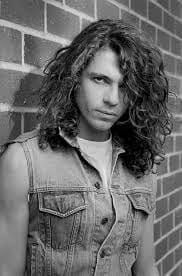
It was in November 1985 that Charles and Diana flew to Melbourne for the huge fund-raising concert Rocking the Royals. The headliners were Australian rock superstars INXS, fronted by the beautiful and charismatic Michael Hutchence.
Acting on a tip-off, I was able to uncover proof that not only did Hutchence and the princess enjoy a tryst in the Ritz Carlton Hotel in the well-heeled Double Bay suburb of Sydney, where the rocker later committed suicide in November 1997; but also that his impossible passion for Diana, kindled in 1985, fuelled his affair with and caused the breakdown of the marriage of Bob Geldof's wife, Paul Yates. Unable to have his adored 'Lady Di', he fell instead for 'Indie Di': the equally flirtatious and racy pop TV presenter Paula. A 'cut-price Diana' and 'default royalty' who bore more than a passing resemblance to the princess in her new incarnation, Paula bore Hutchence a daughter, Tiger Lily, but never succeeded in persuading him to marry her
Diana died in August 1997. When news of the car crash reached him, Hutchence collapsed. He gave the worst performance of his life with his band at a concert in the United States, and never came to terms with his grief over Diana's death. Only weeks later, he was dead too. The coroner found that he had taken his own life in his hotel room at the Double Bay Ritz Carlton. Paula Yates never recovered from the loss, and died of a heroin overdose in 2000.
Falling for rock'n'roll could be said to have been Diana’s ultimate downfall.
'Suicide Blonde' is the title of one of INXS's best-loved hits. The first single from their album 'X', it reached number nine on the US Billboard Hot 100 in 1990 and Number 11 in the UK. It acquired poignance after Diana’s death on 31st August 1997; again just after Michael died on 22nd November 1997; and, most tellingly, after Paula Yates overdosed and died on 17th September 2000, having earlier attempted suicide in 1998.
The beat goes on.