Another Year Over
LAJ reflects on an extraordinary year - and the life lessons she learned from her sports writer father Ken.
This time of year is all about tradition and rituals. One of the most important, for me, is the transferring of birthday and anniversary dates from this year’s diary to next year’s. I don’t have my diary on my phone, or any other kind of tech version. I am old-school: I use a large-format leather Mulberry planner that I’ve had for about thirty years, replacing the pages with a new set towards the end of each year, storing the previous set in my dedicated diary box and starting all over again. My handwriting is always neat and orderly across the first pages of January. By the end of December, tidiness and legibility have given way to a jumble of colours and scrawl that make sense only to me.
If nothing else, my stash of sets of diary pages makes brilliantly reliable research material. I am never at a loss as to when exactly this or that happened, when I travelled here or there, or when and in what location I sat down to interview a subject for a feature or for one of my books. I can look anything up in a beat. It’s all there: the story of my entire adult life, in note form. Not since childhood have I kept a long-form journal. I might once have been the Dear Diary type, but not now.
There is a date over which I always hover. My red pen pauses. I stare at the words. ‘Dad. London Bridge. 1992,’ it says, under 17th December. That was the night when my father Ken Jones fell under a train. The accident occurred at London Bridge station. Dad was on his way home from the office Christmas party at the Independent newspaper, where he worked as a sportswriter and columnist.
A platform change was announced, there was a stampede for the stairs, and the crowd swelled across the footbridge and down the other side as weary passengers scrambled to force themselves onto the incoming train, Dad lost his footing and was swept onto the rails. It took engineers several hours to cut him free from the wreckage. All that time, a paramedic knelt quietly beside him, holding Dad’s head and coaxing him to hold on.
He survived, carried on working as though nothing had happened, continued to play golf – with a ladies’ set of graphite clubs – and resumed crashing round the world covering prize fights, World Cups and Olympic Games as though nothing had happened. He took his disability in his stride, choosing to regard the loss as a gain.
From the valleys
Dad’s heart had never left the South Walian valley of his birth. Though he had never dropped into a coalmine, his father, uncles, grandfather and great uncles had all toiled underground. Black hands, tin baths and a searing longing for the sky scarred his childhood. Yet there was hope. His small, proud father, my grandfather Emlyn, and his uncles came out of the cage to reinvent themselves as distinguished professional footballers.
Their sons followed in their boots. The Jones Boys - five brothers and three of their sons - were legends. Dad was one of them. A brief career on the pitch and an inoperable injury later, he was soon hanging around the backstreet bars of Fleet Street, stretching pints and trying for work.
In those days, they didn't get qualifications in journalism. They started on their knees, scrapped for interviews, made do with quotes, and they grafted. There was poetry in the climb, though Dad scoffed at such a notion. He was a sleeves-up, sixty half-fags in the ashtray, firsts-and-lasts-and-let-them-figure-out-the-middle kind of scribe.
We lost Dad six years ago. Not a day goes by that I don't want to ask him something. His wit, wisdom and mischief often sustained me. For every dilemma I faced, whether personal or professional, he had at least a solution if not always the answer.
He was a devotee of Ernest Hemingway. One of his favourite, oft-re-read novels was Hem's The Old Man and the Sea. I keep a line of it: 'Now is no time to think of what you do not have. Think of what you can do with what there is.'
An extraordinary year
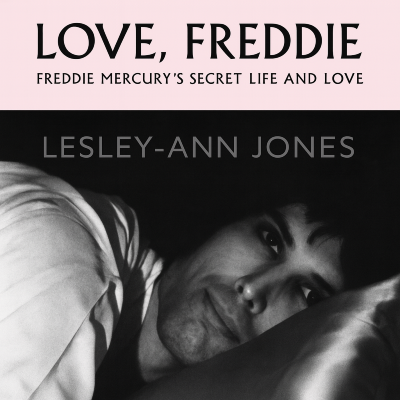
2025 has been an extraordinary year. The most challenging book of my career, four years in the making and based on a most unexpected collaboration with the hitherto unheard-of daughter of Freddie Mercury, was finally published. Since news went viral in May, my feet have hardly touched the ground. The book has taken me around the world.
There is barely a place untouched by it. Not only is it now available in countless countries throughout the English-speaking world but also in many other languages, including Italian, French, Spanish, Brazilian Portuguese, Estonian, Bulgarian and Slovakian.
Initial hostility from some factions of Freddie and Queen fans has mostly given way to wonder and gratitude. The story has sunk in. The reality that Freddie fathered a daughter but kept her existence secret from the world at large for her sake – so that she could grow up privately, unrestricted by his global fame, and enjoy a normal life and education, is at last making sense to most of them.
As for the haters and trolls, what can I say? The good thing about hatred and criticism is that it goes away again eventually. You just have to ride the wave. It tends to flare because humans are averse to change. We resist it – partly, I think, because we fear that it might change us. But if we can just trust a little, and give something new and unexpected a chance, the likelihood is that we will get there in the end.
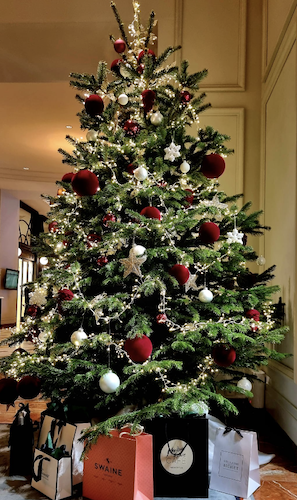
Maybe that’s a little life lesson to carry with us as we immerse ourselves in the rituals and madness of Christmas, before we forge onwards into another year. My other favourite one is this: don’t panic!
Another year older, so what? There is time and time enough to do everything that you need to. You just have to juggle it differently sometimes. Christmas blessings and a wonderfully healthy, happy 2026 to you all.
*Image (c) Alamy/The Independent